
If you’re building a lip product range – whether your first launch or an extension to an existing brand – choosing the right UK lipstick manufacturers is one of the more consequential decisions you’ll make. Lipstick is technically more demanding than it looks. The formula needs to balance pigment depth, texture, wear and comfort while remaining stable across temperature and time. Getting that balance right requires genuine formulation expertise, not just production capacity.
This guide covers what UK lipstick manufacturing actually involves, what to look for when choosing a manufacturer, the formats and routes available, how UK regulations apply to lip products specifically, and how UK manufacturing compares to sourcing overseas.
What does UK lipstick manufacturing actually involve?
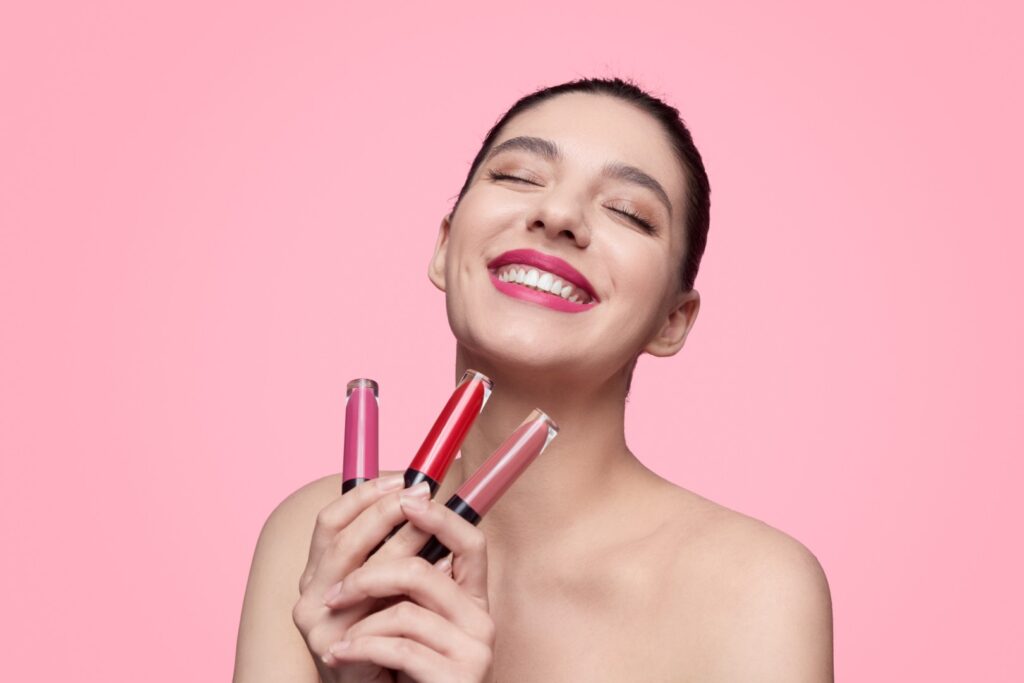
Lipstick manufacturing is more technically complex than many brands expect. Unlike powder or water-based liquid formats, a lipstick bullet requires precise control of wax and oil ratios, pigment dispersion, melt point stability and pour conditions. A formula that looks perfect in samples can bleed, crumble or sweat in the field if those variables are not managed carefully.
A UK lipstick manufacturer typically handles some or all of the following:
- Formula development or selection (white label from existing range, or private label developed for your brand)
- Shade development and colour matching across the planned range
- Stability and compatibility testing – ensuring formula and packaging work together
- Safety assessment against UK cosmetics regulations
- Product Information File (PIF) preparation
- Filling and packaging into primary packaging
- Finished goods delivery
At the more specialist end, manufacturers also support brief development, shade architecture, packaging sourcing and compliance guidance – particularly useful for brands without in-house cosmetic development experience.
Lipstick formats: what UK lipstick manufacturers can produce
The term ‘lipstick’ covers a wide range of formats. Most UK manufacturers with genuine lip expertise produce across several:
| Format | Description | Best route |
|---|---|---|
| Classic bullet lipstick | Traditional push-up stick, full or sheer coverage, standard or slim tube | White label or private label |
| Performance formulas | Formulas developed around specific performance requirements – speak to us about your brief | Private label |
| Tinted balm | Sheer colour with nourishing actives, balm-like texture and low coverage | White label or private label |
| Matte lipstick | Flat non-reflective finish, high pigment – formula quality matters most here | Private label |
| Satin / cream | Mid-sheen finish, comfortable wear, suits a wide range of skin types | White label or private label |
| Lip gloss | High-shine finish, doe-foot or bullet, available clear or pigmented | White label or private label |
Which formats are available varies by lipstick manufacturers Some specialists focus on bullet lipstick only; others produce across the full lip range. If you’re building a multi-format lip range, confirm upfront that your manufacturer can handle all the formats you need.
What to look for in a UK lipstick manufacturer
Pigment expertise
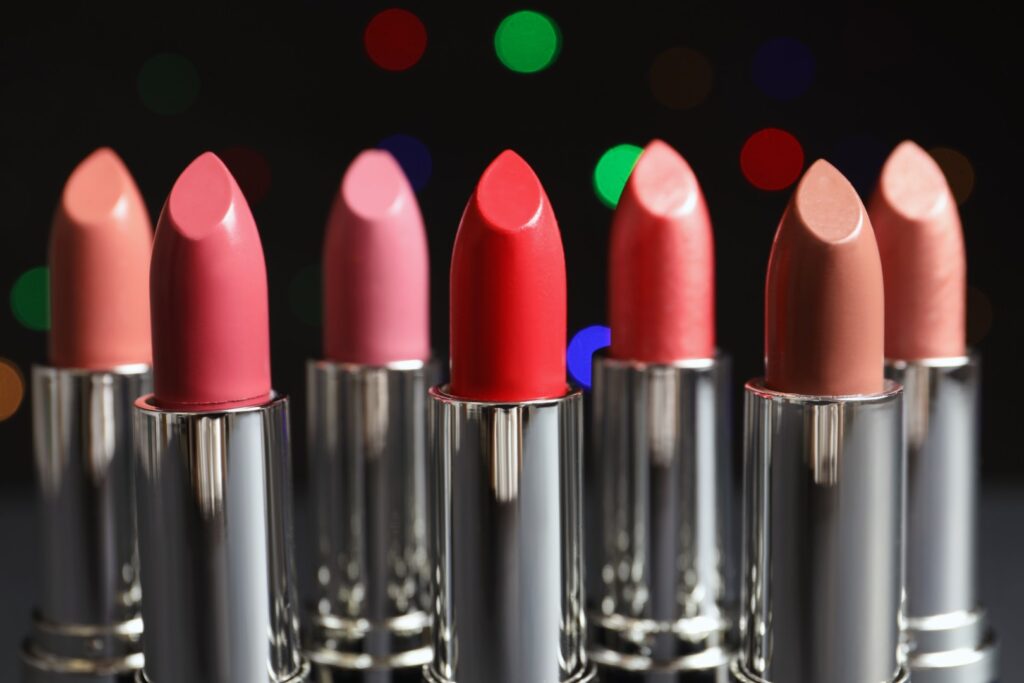
Colour is everything in a lipstick. Look for a manufacturer with genuine shade development capability – not just the ability to hit a colour you specify, but the expertise to develop a full shade architecture from brief. That means understanding undertones, coverage levels, how shades read across different skin tones and how a range holds together visually.
Texture and finish capability
Matte, satin, cream and gloss are technically different formulas, not the same base with a different coating. A manufacturer with strong texture capability can advise on which formulation approach best fits your brief and can develop across multiple textures if your range requires it.
Stability
Lipstick is vulnerable to temperature instability in a way that other cosmetic formats are not. A well-formulated lipstick should hold its integrity across the temperature range likely during transport, storage and consumer use – including warm warehouses, delivery vehicles in summer and letterboxes on hot days. Ask about stability testing protocols before committing.
Lip-specific regulatory knowledge
UK cosmetics regulations include specific restrictions on which colorants are permitted in lip products. Because lip products contact mucous membranes and may be partially ingested during use, not all colorants approved for general cosmetic use are approved specifically for lip products. A manufacturer with genuine lip expertise will work only with lip-approved pigments and can provide the supporting documentation for your Product Information File.
GMP certification
ISO 22716 (Good Manufacturing Practice for cosmetics) is the standard retailers and regulatory bodies expect. Confirm your manufacturer holds current certification – and that it is issued by a recognised accreditation body, not self-declared.
Batch consistency
Lipstick that varies in shade or texture between production runs is a significant quality problem, particularly once customers are re-buying specific shades. Ask about batch testing protocols and how consistency is maintained across runs of different sizes.
MOQs that fit your stage
MOQs vary considerably between manufacturers. Some require 5,000-10,000 units per shade, which is prohibitive at launch or market-testing stage. Others work from 1,000 units per shade. For a multi-shade range, MOQ per shade matters more than MOQ per product.
White label, private label or bespoke: which route is right for your lipstick?
There are three routes to a finished lipstick under your brand name. Each involves a different level of development, investment and exclusivity:
| White label | Private label | Bespoke | |
|---|---|---|---|
| Formula | Manufacturer’s existing range | Your exclusive development | Developed from scratch to brief |
| Exclusivity | No – other brands may use same formula | Yes – formula is yours | Yes – formula is yours |
| Shade development | Select from existing palette | Built to your brief | Built to your brief |
| Time to market | Fastest | Longer | Longest |
| Upfront investment | Lower | Medium | Higher |
| Best for | First launch, market testing | Hero product, established brand | Maximum technical differentiation |
For most brands launching their first lip product, white label is the fastest and lowest-risk route. For brands where the formula itself is part of the proposition – a hero product with a specific story or technical claim – private label gives you exclusivity and the ability to develop something genuinely yours. Bespoke formulation is typically reserved for brands at scale who need maximum technical differentiation.
For a detailed comparison of the three routes, see our guide to private label vs white label cosmetics.
UK regulations for lip products
Lip products are subject to the same UK Cosmetic Products (Safety) Regulations as other cosmetics – but with one important additional consideration. Because lip products contact mucous membranes and may be partially ingested during use, not all colorants approved for general cosmetic use are permitted specifically in lip products.
UK cosmetics regulations (which retained EU Regulation 1223/2009) include Annex IV, a list of permitted colorants. Each entry specifies which applications the colorant is approved for – some are approved for all cosmetics, others are restricted to rinse-off products or excluded from lip use entirely. A manufacturer with genuine lip expertise works only with lip-approved pigments and can provide the documentation your safety assessor needs to complete your Product Information File.
Beyond colorant compliance, the same requirements apply as for any cosmetic product placed on the UK market:
- A completed Product Information File (PIF) for each product and shade
- A qualified Responsible Person designated for the UK market
- Safety assessment completed by a suitably qualified assessor
- Correct labelling in accordance with UK cosmetics regulations
- Notification on the OPSS cosmetics portal (UK market)
A reputable UK manufacturer will guide you through this process and provide the technical documentation you need. You should not be handed finished product and left to manage compliance alone.
MOQs and costs for lipstick manufacturing in the UK
Costs depend on the route (white label vs private label), formula complexity, number of shades, packaging choice and run size. As a general framework:
- White label lipstick: lower unit cost, no development fee, faster to market. MOQs typically from 1,000 units per shade at specialist UK manufacturers.
- Private label lipstick: formula development cost added to production cost. Development is a one-off investment that is spread across the lifetime of the product. Production MOQs are typically similar to white label once development is complete.
- Bespoke formulation: highest development investment, but maximum technical ownership. Suitable when existing formulas cannot meet a specific technical brief.
Packaging is a separate cost and varies considerably by tube quality, mechanism and finish. A good manufacturer will guide you to packaging compatible with your formula and appropriate for your price point.
For multi-shade ranges: a range of ten shades at 1,000 units per shade is a meaningful stock commitment. Starting with two or three hero shades and expanding is a common and sensible approach.
UK lipstick manufacturers vs overseas: practical comparison
| Factor | UK manufacturer | Overseas manufacturer |
|---|---|---|
| Lead times | Shorter – no shipping or import delays | Longer – shipping, customs, potential delays |
| UK compliance | Built in as standard | Must be independently verified |
| MOQs | Often lower – from 1,000 per shade at some UK manufacturers | Often higher – 5,000-10,000+ per shade common |
| Communication | Direct, same time zone, same language | Time differences, potential language barriers |
| Sample iterations | Faster – typically days per round | Weeks per round, adds significantly to timeline |
| Market testing | Accessible – lower MOQs support small test runs | Higher commitment required before you can test |
For brands primarily serving the UK market, UK manufacturing offers a cleaner compliance path and faster sample iteration. The MOQ gap between UK and overseas has narrowed at manufacturers who specialise in smaller brands – 1,000 units per shade is accessible at a good UK manufacturer, making UK manufacturing genuinely viable at launch stage.
How to brief UK lipstick manufacturers
The more specific your brief, the more efficiently a manufacturer can respond. You do not need to know every technical detail – that is what the manufacturer is for – but having answers to the following questions ready will accelerate the initial conversation:
- What is the intended finish? (matte, satin, cream, gloss, sheer)
- How many shades are you planning for the initial range?
- Do you have reference shades or specific colours in mind?
- White label (existing range) or private label (developed for your brand)?
- What is your target price point, and what packaging tier does that suggest?
- Who is the target consumer, and are there specific performance claims you want (e.g. long-wear, hydrating, vegan)?
- What are your timeline and launch date requirements?
You do not need a finished moodboard or technical brief to start a conversation. A clear description of what you want to build and who it is for is a perfectly good starting point.
Our UK lipstick manufacturing
We are a UK colour cosmetics manufacturer based in Ipswich with over 30 years of experience in lipstick and lip colour formulation. The table below summarises our lip manufacturing capability:
| Creative Cosmetics | Details |
|---|---|
| Lip products | Lipsticks (matte, satin, cream, gloss, long-wear), tinted balms, lip glosses, lip liners |
| Routes available | White label (from existing catalogue) and private label (developed for your brand) |
| MOQ | From 1,000 units per shade |
| Shade development | Full palette from nudes to deeps, shade-matching service available |
| Compliance | UK cosmetics regulations built in, safety documentation included |
| Certifications | ISO 9001 and ISO 22716 (GMP) certified by UKAS-accredited GCL International |
| Location | Ipswich, UK (manufacturing in UK or with approved European partners) |
| Experience | 30+ years in colour cosmetics manufacturing, 50+ brands supported |
We manufacture lipsticks in matte, satin, cream and gloss finishes, alongside tinted balms, lip glosses and lip liners. Both white label (from our existing catalogue) and private label (developed exclusively for your brand) routes are available, with minimum orders from 1,000 units per shade.
Our ISO 9001 and ISO 22716 certifications are issued by UKAS-accredited GCL International. Compliance support – including documentation for your Product Information File – is included as part of the manufacturing process.
Frequently asked questions about lipstick manufacturers UK
What is the minimum order quantity for lipstick manufacturing in the UK?
It varies by manufacturer. Our minimum is 1,000 units per shade across both white label and private label routes. Some manufacturers require 5,000 or more. If you are building a multi-shade range, always clarify whether the MOQ applies per product or per shade – the per-shade figure is what determines your total stock commitment.
How long does UK lipstick manufacturing take?
White label can move to production more quickly than private label because the formula is already developed and stability-tested. Private label requires a development phase – typically several sample iterations before stability testing and then production. The exact timeline depends on your brief complexity, the number of shades and the manufacturer’s current capacity. Discuss realistic timelines early in the process rather than working backwards from a launch date.
Can I get a lipstick made in a custom shade?
Yes – most manufacturers offering private label services can develop custom shades to brief. Shade development is typically an iterative process: the manufacturer produces initial samples, you review and give feedback, and shades are refined until approved. White label manufacturers work from an existing palette, so shade options are limited to what is already in the catalogue.
Do UK lipstick manufacturers handle compliance?
The compliance responsibility ultimately sits with the brand placing the product on the UK market – you need a Product Information File, a Responsible Person and correctly labelled products. However, reputable UK manufacturers guide you through this process and provide the technical documentation you need. Confirm exactly what compliance support is included before committing to a manufacturing partner.
Is UK-made lipstick more expensive than overseas?
Unit costs at UK manufacturers are generally higher than at the lowest-cost overseas suppliers. However, the total delivered cost comparison is more nuanced: UK manufacturing avoids import duties, shipping costs, longer lead times and the compliance verification work required for overseas formulas. For brands prioritising compliance, accessible MOQs and fast sample turnaround, UK manufacturing is a competitive option.
What certifications should I look for in a UK lipstick manufacturer?
ISO 22716 (Good Manufacturing Practice for cosmetics) is the minimum to look for. ISO 9001 (quality management systems) is also relevant. Confirm certifications are current and issued by a recognised accreditation body. UKAS-accredited certifiers in the UK are the benchmark. Self-declared GMP compliance without third-party certification is not equivalent.
Why are lip product regulations stricter than other cosmetics?
Because lip products contact the mucous membranes of the lips and may be partially ingested during use, regulators apply tighter restrictions on which colorants are permitted in these products compared to leave-on or rinse-off cosmetics applied elsewhere. The Annex IV colorant list in UK cosmetics regulations specifies approved applications for each colorant, and lip products have their own category. Working with a manufacturer who understands these restrictions protects you from compliance risk.
What is the difference between private label and white label lipstick?
White label means selecting an existing, proven formula from the manufacturer’s catalogue and selling it under your brand name. Other brands may use the same formula. Private label means the manufacturer develops a formula exclusively for your brand – it is not available to anyone else. White label is faster and lower cost; private label gives you exclusivity and greater control. For a detailed comparison, see our guide to private label vs white label cosmetics.
Talk to us about your lip colour project
We work with brands at every stage – from founders developing their first hero product to established brands extending an existing range. Whether you are exploring white label options or ready to brief a private label development, the starting point is a conversation.
Get in touch at creativecosmetics.com/contact