If you’re in the early stages of building a cosmetics brand, you’ve probably come across both terms. Private label vs white label cosmetics. They sound similar, they’re often used interchangeably, and the difference between them isn’t always clearly explained.
It matters, though – because the route you choose affects your timeline, your budget, how much flexibility you have and ultimately what your products feel like to your customers.
Here’s the clear version.
What is private label cosmetics?
Private label means working with a manufacturer to create a product that is made exclusively for your brand.
Unlike white label, a private label product isn’t shared with other brands. The manufacturer works with you to develop something specifically for your brand – a formula that, once made, is yours. You guide the brief, the manufacturer brings the technical expertise, and the resulting product belongs to you.
The main advantage is exclusivity. Your product is genuinely yours – not a formula that other brands are also selling under different labels. That exclusivity can be a real asset as your brand grows, particularly if the product itself is part of your story.
Private label cosmetics typically requires more investment than white label – both in time and cost – because the manufacturer is doing dedicated work for your brand rather than producing an existing formula. But for brands where the product itself is central to the proposition, that investment is usually worth it.
The trade-off is that it takes longer and costs more upfront than white label. If you’re just starting out and testing the market, white label may be a smarter first step – with private label as a natural next move once the brand is established and you’re ready to own the formula.
What is white label cosmetics?
White label means selecting an existing, proven formula from a manufacturer’s range – one that other brands can also access – and selling it under your own brand name.
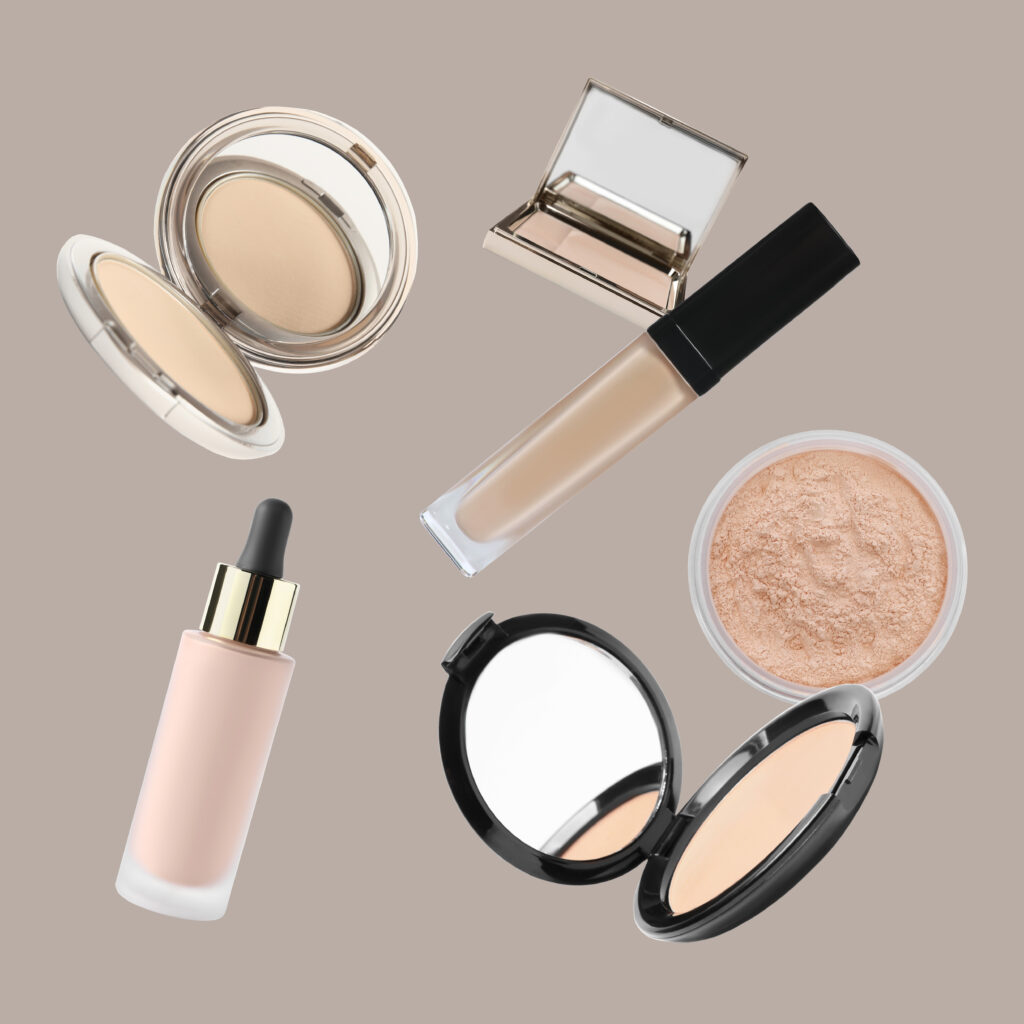
You choose from the cosmetics manufacturer’s catalogue – a lip gloss, a face primer, a mascara – select your packaging, choose your shades if applicable, add your label and branding, and it goes to market as your product. The formula is already proven, safety-tested and ready to go.
It’s the fastest, most cost-effective route to market. Because there’s no development work needed, you can move from brief to finished product significantly quicker than any other route – and the costs are lower because the formula work is already done.
The trade-off is that the formula isn’t exclusive to you. Other brands may use the same underlying formula under their own labels. What differentiates your product in the market is the brand you build around it – the positioning, the story, the packaging and the audience you serve.
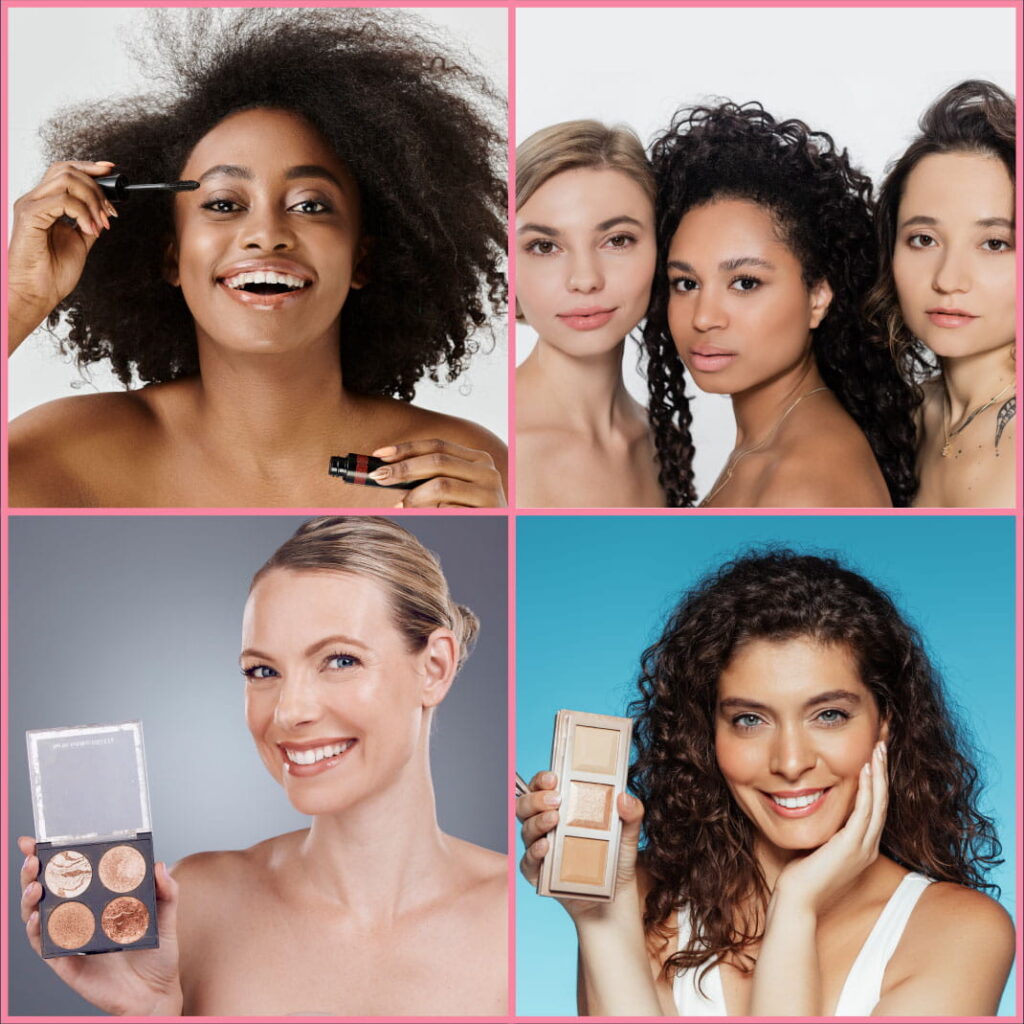
Private Label vs White Label Cosmetics.
So which one is right for you?
It depends on three things: your timeline, your budget and how much the formula itself matters to your brand story.
Choose private label if:
- You want a formula that’s exclusive to your brand
- Your product’s uniqueness is part of your brand story
- You’re willing to invest more time and budget for that ownership
- You want to work with the manufacturer on something created specifically for you
Choose white label if:
- You want to get to market quickly with a proven, ready-to-go formula
- You’re working with a tighter budget
- The brand and positioning will be your differentiator, not the formula itself
- You’re testing a new category before committing to full development
A word on MOQs
Whichever route you go, minimum order quantities matter. White label tends to have the most accessible entry point because the formula is already done – there’s no development cost to recoup. Private label and bespoke typically require more investment because more work goes into the product upfront.
At Creative Cosmetics, we work from as low as 1,000 units per product or shade across private label and white label, which makes it realistic for startups and smaller brands to access professional manufacturing without overcommitting on stock.
Not sure which route is right for you?
We’re happy to talk it through. Most of our conversations with new clients start exactly here – with the question of which route makes sense. There’s no one-size-fits-all answer, and we’d rather help you figure out the right approach than push you towards whatever’s easiest for us.
Get in touch and tell us about your project at creativecosmetics.com/contact
Creative Cosmetics is a UK colour cosmetics manufacturer based in Ipswich. We offer private label, white label and bespoke formulation for face, eye, lip and body products, with minimum orders from 1,000 units.
Frequently asked questions about Private Label vs White Label Cosmetics
Is white label the same as private label cosmetics?
Related, but different. Both result in a product sold under your own brand name – but the key difference is exclusivity. White label means you select from a manufacturer’s existing range of formulas that other brands can also use. Private label means the manufacturer develops a formula specifically and exclusively for your brand – it’s not available to anyone else.
White label is faster and more affordable. Private label gives you greater ownership and differentiation. The right choice depends on how central the formula itself is to your brand proposition.
Can I change the formula on a white label product?
No – the formula in a white label product is fixed. That’s part of what makes it cost-effective and quick to market: the development work is already done. What you can customise is the packaging, shade selection (where applicable), and your branding and labelling.
If you need the formula itself to be different, that moves into private label territory – where the manufacturer develops something exclusively for you.
Do I own the formula if I go private label?
Yes. With private label, the formula is developed specifically for your brand and is not shared with or made available to other brands. That gives you genuine product exclusivity – which is particularly valuable if the formula is central to your brand story or point of difference.
Which is cheaper – white label or private label cosmetics?
White label is typically the more cost-effective route. Because the formula already exists and has been safety-tested, there’s no development cost to absorb – you’re paying for production, packaging and your minimum order run.
Private label requires more upfront investment because the manufacturer is doing dedicated formulation work for your brand. At Creative Cosmetics, both routes start from 1,000 units per product or shade.
Is white label faster to market than private label?
Yes, significantly. With white label there’s no formula development or testing phase – you’re working from proven formulas that are ready to go, so you move straight to packaging, production and fulfilment. With private label, the manufacturer needs to develop and test a formula specifically for you, which adds meaningful time.
If speed to market is a priority – particularly for a first launch or a new category test – white label is the clear choice.
Do white label and private label have different minimum order quantities?
They can. White label tends to have the most accessible entry point because the formula is already proven – there’s no development cost to recoup, so manufacturers can accommodate smaller runs. Private label often requires more investment because dedicated formulation work is involved.
At Creative Cosmetics, we work from 1,000 units per product or per shade across both routes – kept deliberately low so that smaller and emerging brands can access professional manufacturing without over-committing on stock.
Can other brands use the same white label formula as me?
Yes – that’s inherent to how white label works. The same underlying formula can be used by multiple brands, each selling it under their own packaging and branding. This is why white label is faster and lower cost: the formula isn’t exclusive to you.
If having an exclusive formula is important to your brand, private label is the right route.
Is white label cosmetics legal?
Yes, completely. White label is a standard, legitimate model used across many industries including cosmetics. As the brand owner placing the product on the UK market, you’re responsible for ensuring compliance with UK cosmetic regulations – including having a valid Product Information File (PIF) and a designated Responsible Person.
A reputable UK manufacturer will guide you through exactly what’s required so you can launch with confidence.
Can I build a full cosmetics range on white label, or just individual products?
You can absolutely build a full range. Many brands start with one or two hero products and expand from there – white label makes that kind of staged growth very manageable because each product can be added individually as the brand grows.
At Creative Cosmetics our white label catalogue spans:
- Face: primers, foundations, concealers, powders, blushers, bronzers, contour and highlight
- Eyes: mascaras, eyeliners, eyeshadows, brow products
- Lips: lipsticks, glosses, balms, lip liners
- Hybrid and skincare-inspired: tinted moisturisers, BB-style and treatment-adjacent formats
Most brands find everything they need to build a coherent range within it.
The formula is already safety-tested – what compliance do I still need to handle as the brand owner?
Even with a pre-tested white label formula, the legal compliance responsibilities sit with you as the brand placing the product on the UK market. That means having a valid Product Information File (PIF) for each product and a designated Responsible Person in place – both requirements under UK cosmetic regulations.
At Creative Cosmetics, we guide clients through what’s needed as part of the process. You won’t be handed a finished product and left to work it out alone.