One of the biggest misconceptions about launching a cosmetics brand is that you need to order thousands of units before you can test whether a product actually works. You don’t. Small Batch Cosmetics Manufacturer UK exists precisely for this reason – and understanding how it works can make the difference between a brand that launches confidently and one that never quite gets started.
Here’s a clear-eyed look at what small batch manufacturing actually means, what it costs, and how to make the most of it.
What is a Small Batch Cosmetics Manufacturer UK?
Small batch manufacturing means producing cosmetics in lower quantities than a traditional large-scale production run. Rather than committing to 10,000 or 50,000 units upfront, you start with a more manageable volume – typically from 1,000 units per product or per shade.
It’s designed for brands at the earlier stages of development: testing a new product before scaling, launching a capsule range without overcommitting on stock, or building a brand gradually rather than all at once.
The formula, quality standards and manufacturing processes are identical to a large production run. Small batch doesn’t mean lower quality – it means lower risk.
Why small batch matters for new and growing brands
The financial logic is straightforward. If you’re launching your first product, the last thing you want is a warehouse full of stock you’re not sure will sell. Small batch manufacturing lets you:
Test the market properly. A run of 1,000 units gives you enough product to sell meaningfully, gather real customer feedback and understand what’s working – before you invest in a much larger run.
Manage cash flow. Committing to 10,000 units ties up significant capital. Smaller runs keep your cash available for marketing, packaging improvements and building the business.
Move quickly. If a product isn’t landing the way you hoped, you haven’t sunk your budget into a production run you can’t shift. If it’s flying, you scale with confidence.
Build a range gradually. Many of our clients start with one or two hero products and add to the range as the brand grows. Small batch manufacturing makes that kind of staged approach realistic.
What “low MOQ” actually means in practice
MOQ stands for minimum order quantity – the smallest number of units a manufacturer will produce in a single run. It’s one of the first questions worth asking any manufacturer you’re considering.
MOQs vary significantly across the industry. Some manufacturers set minimums at 5,000 or 10,000 units per product. Others, particularly those set up to work with smaller and emerging brands, work from much lower minimums.
At Creative Cosmetics, our MOQs start from 1,000 units per product or per shade. For a lip collection with four shades, that means you could launch with 4,000 units across the range – a realistic, manageable starting point that doesn’t require you to bet the entire business on a single production run.
It’s also worth asking whether the MOQ applies per product or per shade. If you want multiple colourways of the same formula, the answer to that question makes a significant difference to your planning.
What products work well in small batch?
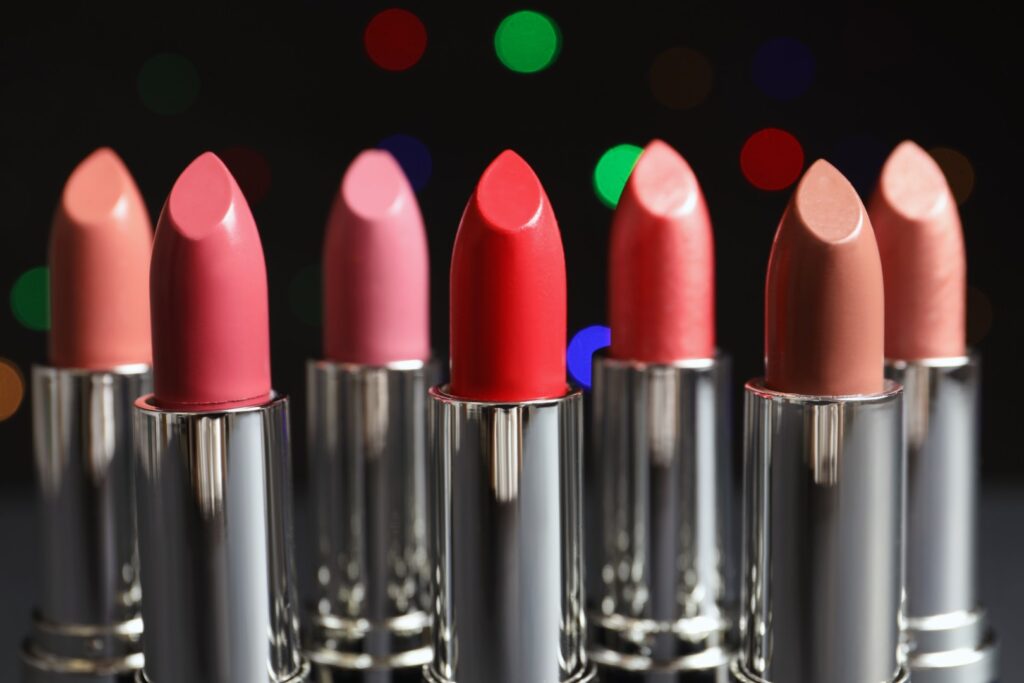
Most colour cosmetics lend themselves well to small batch production. At Creative Cosmetics, our small batch capability covers our full product range:
- Face: primers, foundations, skin tints, concealers, powders, blushers, bronzers, contour and highlight products
- Eyes: mascaras, eyeliners, eyeshadows, brow products
- Lips: lipsticks, glosses, balms, lip liners
- Hybrid formats: tinted moisturisers, BB-style and treatment-adjacent products
- Men’s: beard oils, balms, brow and complexion products
The route you take – private label, white label or bespoke – will affect both the timeline and the MOQ. White label (working from our existing, proven formulas) is typically the most accessible entry point. Private label allows more customisation but requires a bit more involvement on both sides.
Timelines for small batch production
Small batch runs don’t automatically mean faster production. The manufacturing timeline depends on a number of factors, and it’s worth understanding these before you plan your launch.
Formula and sampling: If you’re working from an existing formula, this stage is much faster – you’re refining shades and textures rather than developing a formula from scratch. Expect a few rounds of sampling to get things exactly right.
Packaging: This is the variable most brands underestimate. Lead times for custom or semi-custom packaging – bottles, tubes, compacts, outer boxes – can run to eight to twelve weeks. Standard stock packaging components are faster. Whatever packaging route you choose, lock it down early.
Safety testing and compliance: Every cosmetic product sold in the UK requires a Cosmetic Product Safety Report (CPSR) before it can go on sale. This is non-negotiable, and it takes time. We arrange this as part of our process, but it’s worth factoring into your overall timeline from day one.
Production and fulfilment: The actual manufacturing run, once everything is approved, moves relatively quickly. It’s the stages before production that determine your launch date.
With a clear brief, prompt decision-making and standard packaging components, small batch projects can move from first conversation to finished stock within three to five months. Bespoke packaging and formula development will add time.
Small batch vs scaling up: when to grow
One of the most common questions we hear is: “When should I move to a larger production run?”
The honest answer is: when the numbers tell you to.
Once a product is proving itself – you’re selling through consistently, the margin is working and you’re confident in the formula – a larger production run makes financial sense. Your unit cost will typically be lower at higher volumes, which improves your margins and makes the business more viable at scale.
The progression most brands follow is:
- Launch with a small batch run to test and validate
- Refine based on real feedback (packaging tweaks, shade adjustments, messaging)
- Scale to a larger run once the product is proven
There’s no fixed timeline for this. Some brands scale within six months of launch; others stay in small batch production for longer while they build their audience. The right time to scale is when you’re confident, not when you’ve run out of stock in a panic.
How to get started with small batch cosmetics manufacturing
The best starting point is a conversation. Tell us what you’re trying to make, roughly how many units you’re thinking about, and whether you have a reference product, shade direction or brief to share.
From there we’ll give you an honest picture of what’s realistic: the route that makes most sense for your project, an indicative cost range, and a realistic timeline.
Get in touch at creativecosmetics.com/contact
Frequently asked questions about small batch cosmetics manufacturing
What is the minimum order for small batch cosmetics in the UK?
It varies by manufacturer. At Creative Cosmetics, our minimum order starts from 1,000 units per product or per shade across private label and white label. MOQs for bespoke formulation may differ depending on the complexity of the brief. Always ask whether the MOQ applies per product or per shade – it makes a significant difference to your planning.
Is small batch cosmetics manufacturing more expensive per unit?
Yes, typically. A smaller production run means the fixed costs – set-up, safety testing, any tooling – are spread across fewer units, so your cost per unit is higher than it would be on a larger run. That’s the trade-off for lower risk and less capital tied up in stock. As you scale to larger runs, your unit cost will come down.
Can I get samples before committing to a small batch run?
Yes. Sampling is a standard part of our process. Before any production run – however large or small – we work through samples with you to get the formula, shade and texture exactly right. We don’t move to production until you’re happy.
What’s the difference between small batch and white label manufacturing?
These aren’t mutually exclusive. White label refers to the manufacturing route – working from an existing, proven formula without custom development. Small batch refers to the volume. You can do a small batch run of a white label product, or a small batch run of a privately developed formula. Most first-time brands combine both: white label route, small batch volume.
Can I launch a full cosmetics range through small batch manufacturing?
Yes. Many of our clients build their full range through small batch production, adding products as the brand grows rather than launching everything at once. Starting with one or two hero products is usually the smarter approach – it keeps your focus sharp and your costs manageable while you build an audience.
How long does a small batch cosmetics run take?
Typically three to five months from first conversation to finished stock, assuming standard packaging components and a clear brief. Custom packaging, bespoke formula development and multiple rounds of sampling can add time. The honest advice is to start earlier than you think you need to.
Do small batch products still need safety testing?
Yes, without exception. Every cosmetic product sold in the UK must have a Cosmetic Product Safety Report (CPSR) before it goes on sale, regardless of the batch size. We arrange safety testing as part of our process, so you’re not managing this alone – but it needs to be factored into your timeline.
Creative Cosmetics is a UK colour cosmetics manufacturer based in Ipswich. We specialise in small and medium batch production for independent brands, emerging businesses and creators, with minimum orders from 1,000 units and hands-on support from idea to finished stock.